

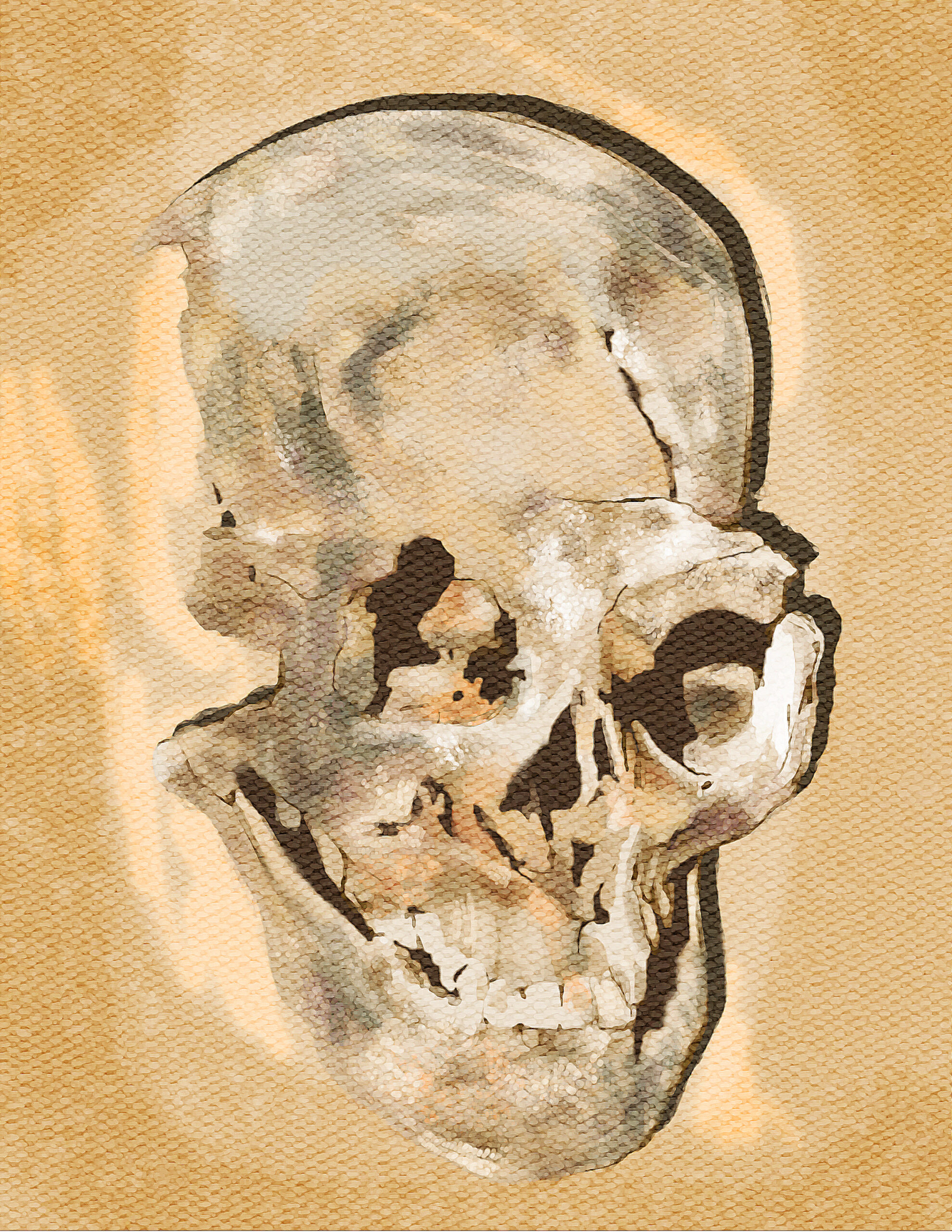
Calavera
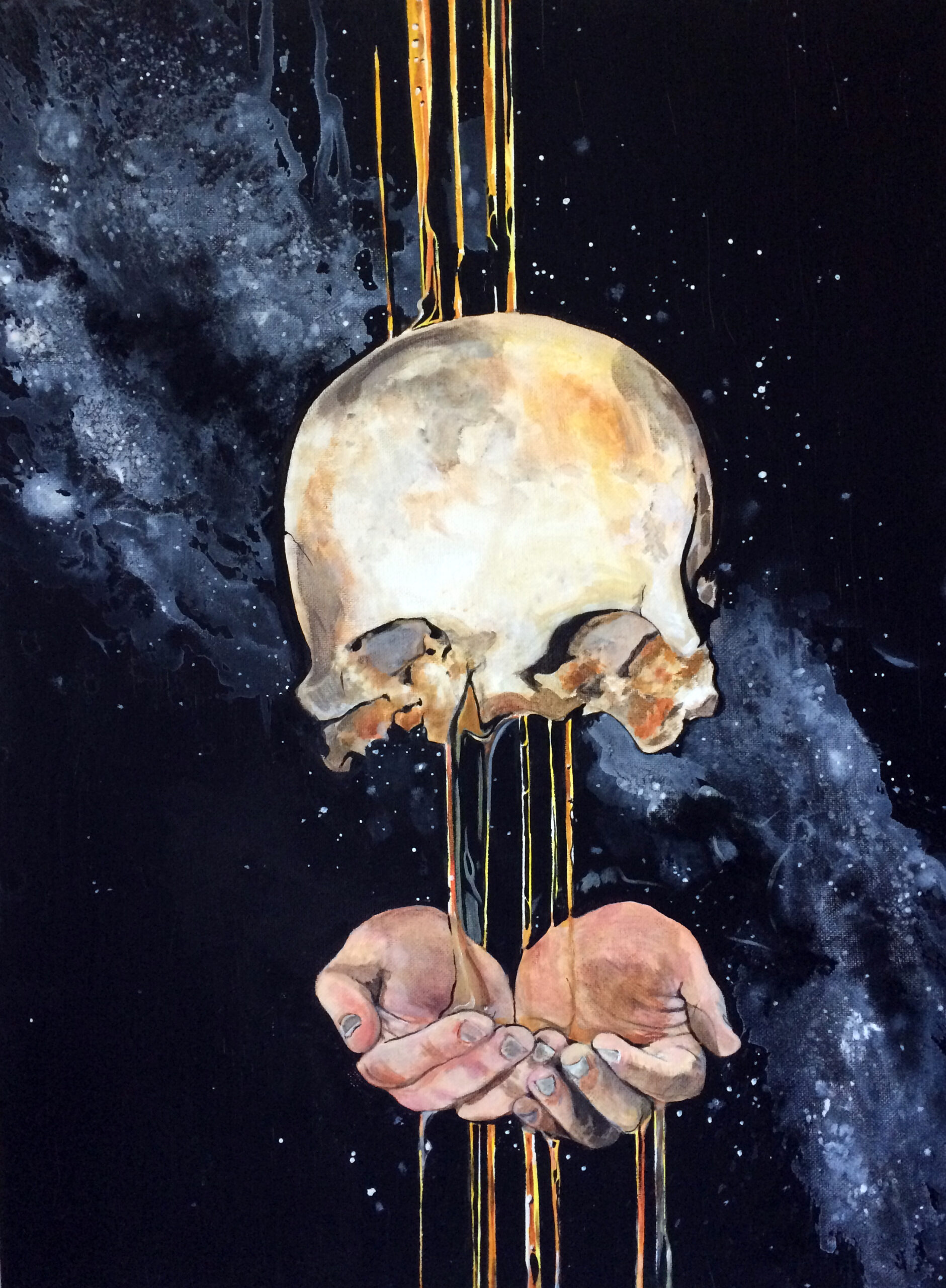
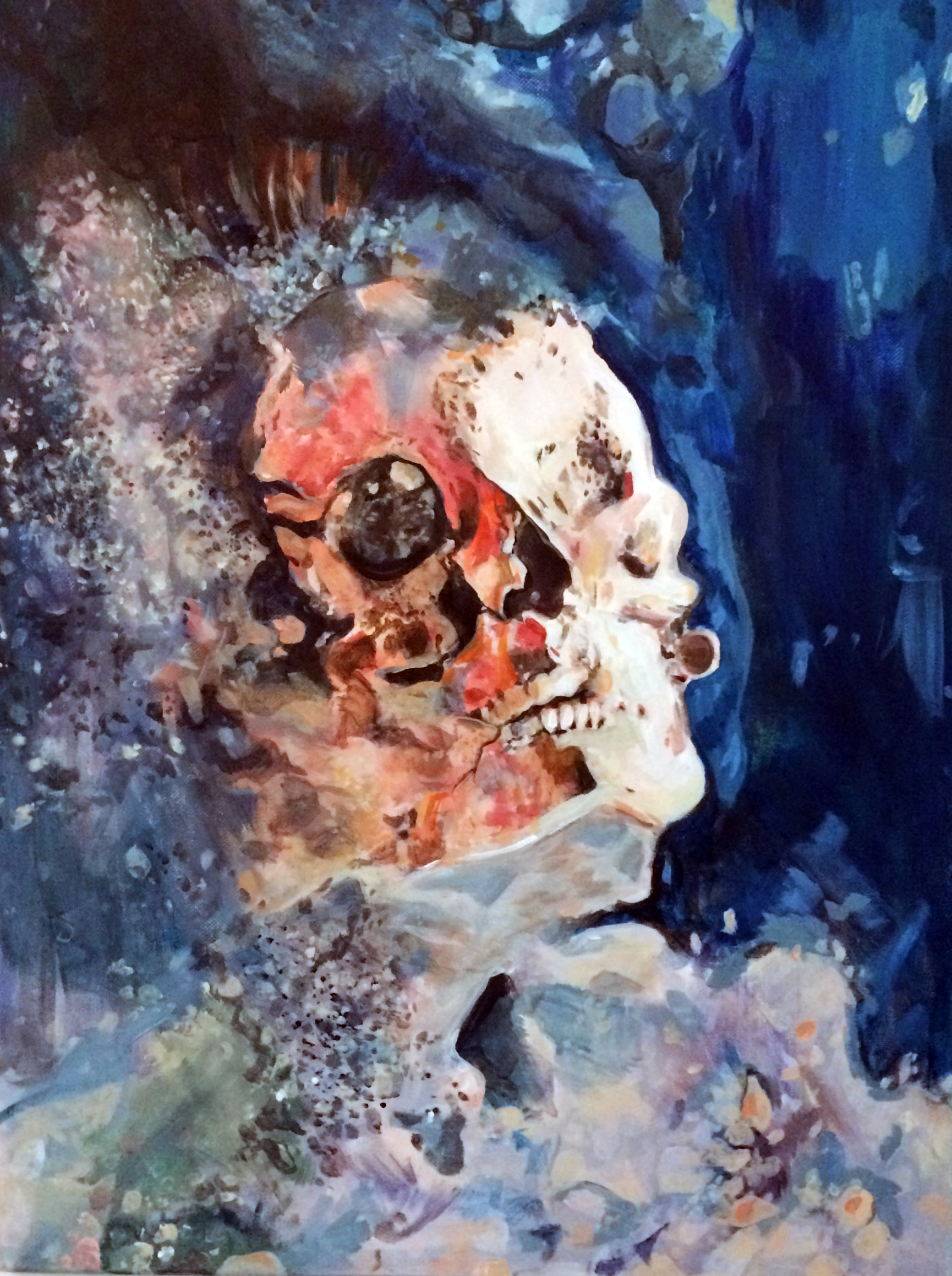
Jay Crane’s Calavera series feels like a collision of vanitas painting and cosmic abstraction. Each canvas centers on the human skull—a classic memento mori motif—yet he renders it in fluid, almost watercolor-like washes rather than hard-edged realism. Golden ochres and warm ivory tones bleed organically into deep indigos and inky blacks, as if the bone itself is dissolving into the surrounding void. Vertical drips of metallic pigment run through the composition, suggesting both the passage of time and a kind of sublime alchemy, where life (hands cupped in offering) and death (the skull) pour into one another.
Brushwork ranges from meticulously detailed—note the subtle fissures and textural pitting of the cranial surface—to wildly gestural splatters and sponges of pigment that recall nebulae or decaying matter. Crane exploits the raw canvas both as a visual “ground” and a tactile element: unpainted areas peek through, so that the skull hovers between material presence and ghostly apparition. The negative space around the forms isn’t neutral; it’s charged with speckles of paint that feel like stars, placing each skull in an almost ritualistic, otherworldly context.
Overall, the Calavera paintings fuse figurative anatomy with expressionist abstraction. They’re equally concerned with the tactile, flesh-and-bone reality of our mortal frames and the larger, ineffable mysteries beyond—death as both intimate surrender (hands open) and cosmic transcendence (drips melting into stardust). The result is a hauntingly beautiful study of impermanence, executed in a palette that balances earthbound warmth with the cool vastness of night.